
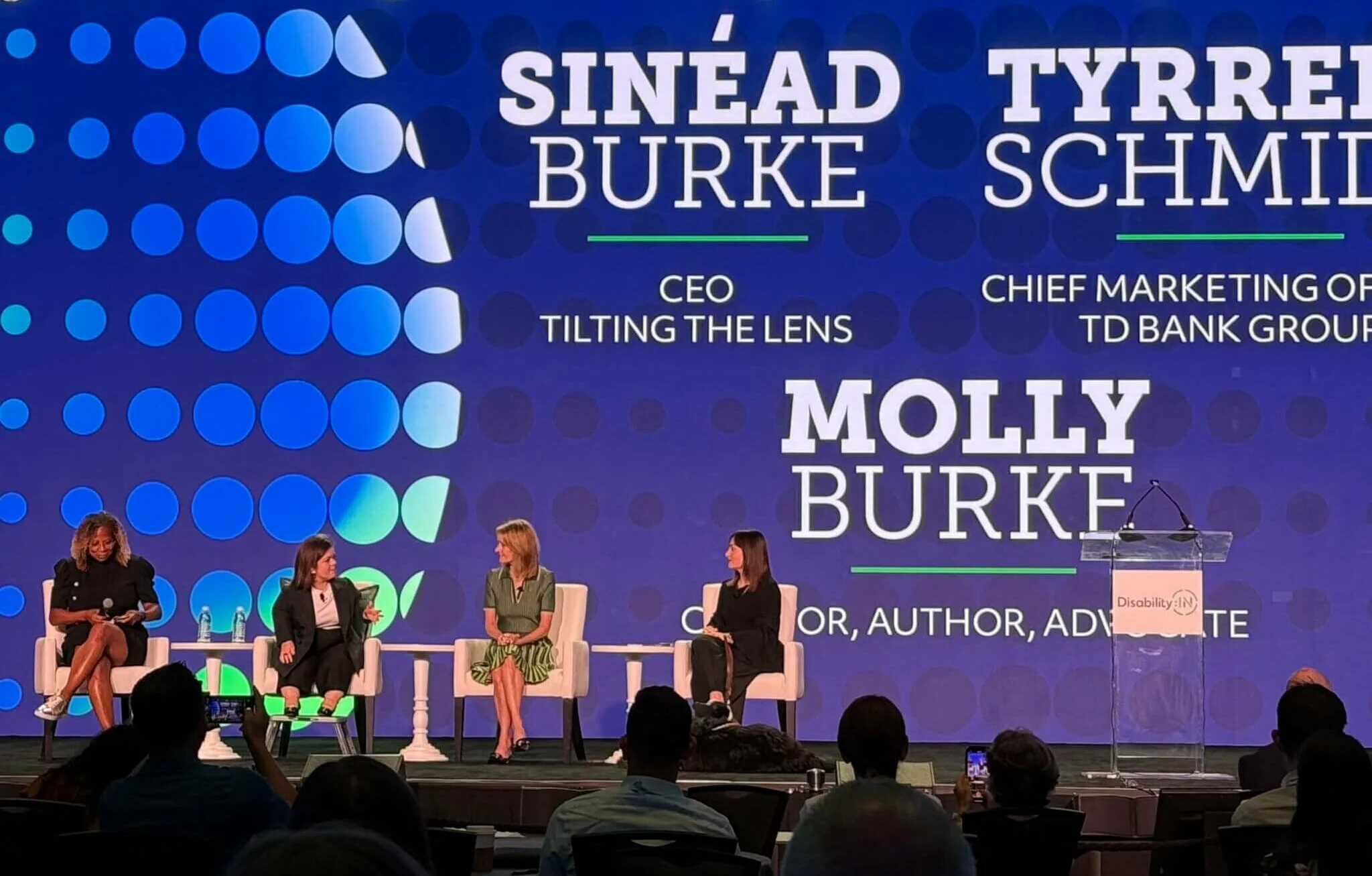
Disability inclusion should be an ongoing business priority, which is why we’re still talking about it now. In January. Because it’s not a priority bound by an awareness month – the timing of the celebration for which isn’t even globally consistent.
Disability acceptance. Inclusive design. “Nothing about us without us.” You can aways find so many buzzwords and phrases related to the concept swirling around, but the bottom line is that it’s so much bigger than one day, week or month. In the US, July was Disability Pride Month — a month celebrating the achievements, history and culture of the disabled community and commemorating the passing of the Americans with Disabilities Act July 26, 1990. And it’s something that’s more important to our business — and to the businesses our agencies support — than often realized.
Weber Shandwick attended Disability:IN’s 2025 conference in Orlando, coming together with the companies and changemakers who understand the value of and reasons behind prioritizing disability inclusion. Stats from the World Health Organization note an estimated 1.3 billion globally have a significant disability, which is 16% of the world’s population. As shared by assistive technology company Everyway, workforce trends currently indicate that by 2040, more than 40% of the global workforce will identify as neurodivergent. And these are people who play important roles within your organization, or represent a much bigger fraction of your client’s market base – whether either realize it or not.
AI takes center stage
One of the main themes of the conference was AI, and the promise of it to help unlock numerous opportunities for the disabled community. One of the days of the conference was devoted almost entirely to this topic.
Most websites today are not designed for accessibility, and because current AI and LLM models pull their knowledge from what already exists, when we ask it to create content or help design a new website, it’s likely to make one that is not accessible. This is why universal design principles that are increasingly present in our physical world – tactile maps, smoother floor transitions, adaptive furniture – need to be holistically implemented in the digital world. They also do not visually represent people with disabilities when generating imagery and typically rely heavily on stereotypes when they do.
Ernst & Young’s report GenAI for accessibility: more human, not less was featured in discussions, underscoring the valuable role Gen AI has begun to play for people with disabilities and those who identify as neurodiverse. They reported using Copilot specifically helped 88% of respondents feel more productive, with 80% feeling more confident in written communication and 72% saying they were more easily able to get to a first draft. These benefits in clarity extend within organizations as well as to the entire employee base.
Neurodiversity at Work
At the conference, Disabilty:IN debuted their Neurodiversity at Work Report research on neurodiversity – titled Creativity Over Convention: an evidence-based framework for neuroinclusive human capital management. Today’s office spaces can be a nightmare for a neurodiverse person, with loud conversations, no ability for deep focus and the visual, and often auditory, distraction of the set level of the overhead fluorescent lights. These environmental factors have both a social and sensory impact to neurodiverse employees, with an impact on their productivity.
And as is common, and was seen in their research, not all your employees will self-identify. Exact stats are unknown but it is estimated that 70% of Gen Alpha are neurodiverse, up from the estimated 50% of Gen Z. Some of the skills neurodiverse individuals possess, such as recognizing patterns, analytical tendencies and attention to detail, may give them a leg up as we transition into a world focused on Gen AI. This means it’s even more important for employers to address these concerns in what they offer all employees to help set this population up for success.
What does all of the above mean for agencies? Well, it’s two-fold – with considerations both for agencies and, where possible, for client opportunities.
- Fostering supportive and open environments: The fact is that whether now or later, on an ongoing basis or only temporarily, almost everyone will be disabled. It’s well known that only a minority of your employee population will self-identify. Out of the respondents to Disability:IN’s Neurodiversity at Work, only 65% confirmed they self-disclose to their employer.
- Championing accessibility both in your organization’s content and, for agencies, in client content. There are so many options now at various price points to make this possible. Inside your agency, it’s about captions in larger organizational meetings. For your clients, it’s about making websites and digital content as accessible as possible to all and including disabled talent both in front of and behind cameras, and on the strategy and/or creative teams to help drive inclusive ideation and content creation.
- Empowering managers to provide a supportive role for all. Training managers to be clear on directions, feedback and with agendas for meetings not only helps to meet the needs of many subgroups within the disability community, but also makes for a clearer approach to communication for all employees.
- Continue leaning into versus pulling away from flexible work arrangements. There’s been so much focus as of late on the shift on return to office for so many organizations. While remote work is beneficial as well for people with disabilities, flexibility goes well beyond remote work. As Disability:IN’s recent research shared, it also includes the ability to customize one’s setting, schedule and time away, and flexibility along these lines is typically more important in principle than remote work.
When all employees can be, and bring their authentic selves to the workplace, everyone benefits – creating a workplace that is attractive to all talent. This again is where we can use deep research and analysis (AI) to understand that different behaviors and needs in the workplace that may have previously been dismissed as ‘bad performance’ aren’t necessarily indicative of underperformers but instead are a disconnect between what people need to succeed and the limits of an outdated model of working in the office.
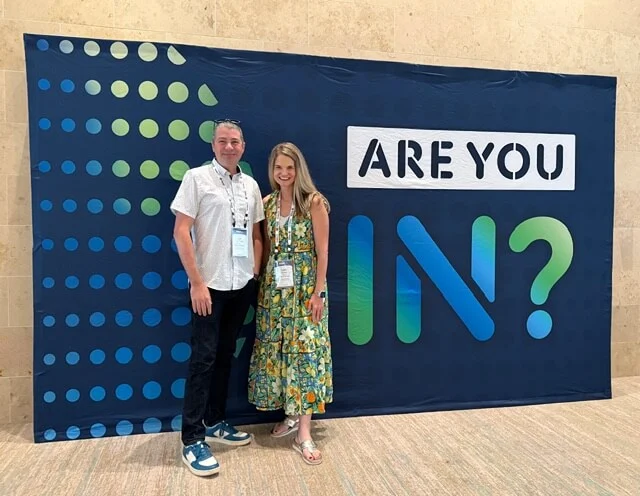
Our experience at the Disability:IN conference and in continuing conversations both inside and outside our walls reiterate what we suspected going into our time in Orlando – that we’re only just beginning to scratch the surface on all that is possible.
Jim O’Connell is Senior Vice President, Health Media, Chicago Health Media Lead and previous lead of The Weber Shandwick Collective’s equitABLE Business Resource Group.
Lara Ziobro is SVP Global Communications and Marketing and is the Lead for equitABLE. She is also part of Disability:IN’s CMO & CCO Coalition.